Second Chance vs. Traditional Apartment Search: Which Is Right for You?
If you have a flag on your record, a traditional search can burn fees on auto-denials. Compare both paths and learn when each one fits.
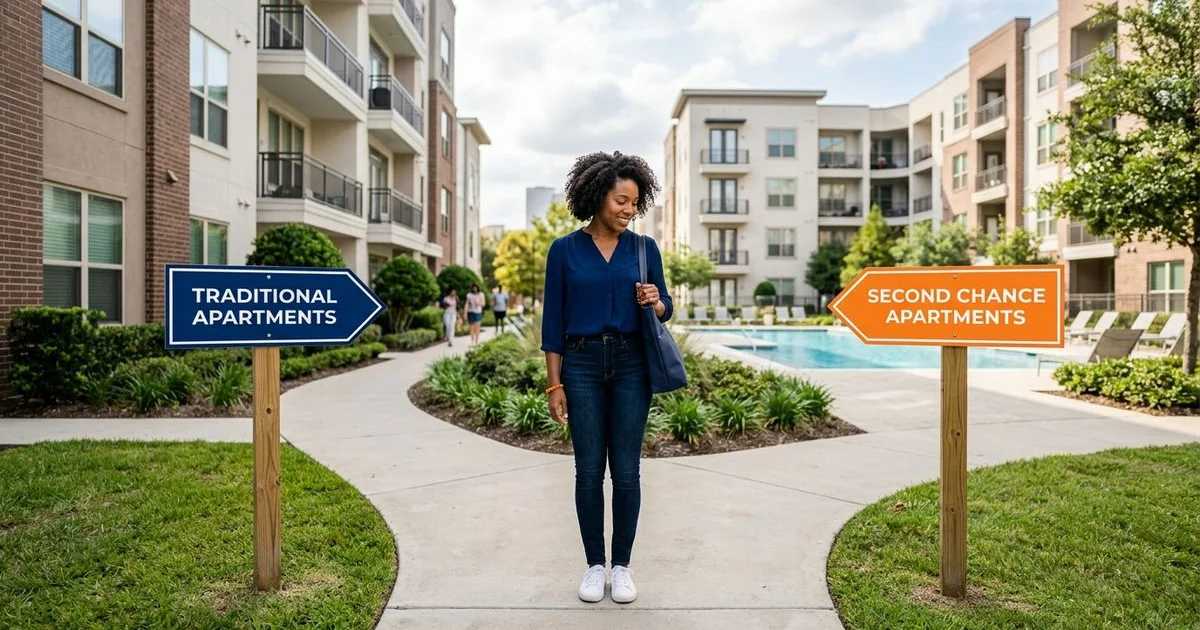
Should you do a traditional apartment search yourself, or work with a second-chance locator? It comes down to whether you have flags on your record. Here’s an honest breakdown — including when a traditional search is actually the right move.
The Two Approaches Side by Side
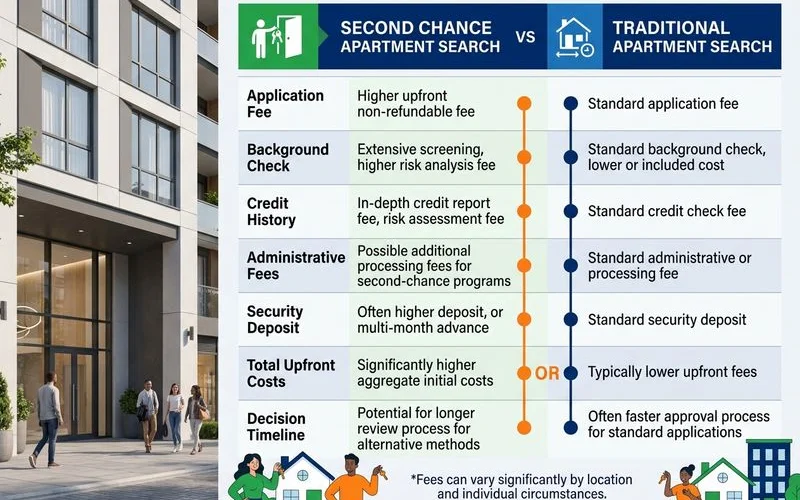
| Traditional Search | Second-Chance Search | |
|---|---|---|
| Who runs the search | You | A licensed locator |
| Where you look | Apartments.com, Zillow, drive-by | Pre-screened community list |
| What it costs you | Free (your time) | Free (locator paid by community) |
| Application fees | $50-$75 per application — pay even on denial | $50-$75 only on pre-screened applications |
| Expected denials | High if flagged | Low — only apply where likely to approve |
| Approval timeline | Highly variable | Usually 1-2 weeks once list is approved |
| Application advocacy | None | Letters of explanation, negotiation, follow-up |
Traditional Search — When It Works
A traditional self-driven apartment search makes sense when:
- You have clean credit (typically 680+) and no record of evictions or broken leases
- You have no criminal background to consider
- Your income is comfortably above 3x the rent at the price range you want
- You’re a returning renter with positive rental history
- You have flexible timing to research, tour, and apply broadly
If all of those are true, you can probably find a good apartment yourself through Apartments.com, Zillow Rentals, or driving the submarket. You’ll spend time, but you’ll save very little money — because the second-chance service is free anyway.
Traditional Search — When It Doesn’t Work
The case against a traditional search if you have any flag:
- Application fees stack fast — Five denials at $65 each = $325, gone.
- You don’t know which communities will deny — The screening criteria isn’t public.
- You don’t know which communities approve evictions, broken leases, or bad credit — That knowledge isn’t on Apartments.com.
- You lose negotiating leverage — Without an advocate, conditional-approval terms are whatever the leasing office offers, take it or leave it.
- You waste weeks — Multiple denials feel demoralizing and delay your move.
For flagged renters, traditional searches often take 6-12 weeks and cost $300-$800 in fees before landing an approval. A pre-screened search typically lands an approval in 1-3 weeks for $65-$130.
Second-Chance Search — When It Works
If any of these apply, a pre-screened second-chance search is almost always the right move:
- Eviction (paid or unpaid) within the last 7 years
- Broken lease with rental debt
- Credit score below 650
- Discharged bankruptcy within the last 5 years
- Misdemeanor or non-violent felony within typical look-back windows
- Deferred adjudication that’s surfacing in screening
- First-time renter with no rental history
- Income below 3x rent at the apartments you want
You don’t have to fit all of these. One is enough.
What “Pre-Screened” Actually Means
A pre-screened search is the locator doing the screening match before you apply. We take your specific situation — credit score range, eviction status (paid/unpaid/timing), broken-lease status, criminal history, income — and match it against the screening configurations of 1,000+ Houston communities.
The output is a personalized list of communities where you have a real likelihood of approval. You then apply only to those communities. Each application fee you spend has a strong chance of returning an approval rather than a denial.
What About Communities That Run Their Own Background Checks?
A small number of Houston communities run their own internal screening rather than relying on RealPage, CoreLogic, or SafeRent. For those, our pre-screening uses the community’s published criteria and our historical experience with them. It’s slightly less precise than the automated-screening match but still highly directional.
Time vs Money
A traditional search costs time and risks money on application fees. A second-chance search costs you time too (less of it) but typically saves money on fees and gets you to “approved” faster.
If you have any flag, the second-chance path is essentially never a worse choice. The service is free, and the pre-screening cuts wasted applications.
Bottom Line
If you have a clean record and clean credit, you can do this yourself — or use a locator for the convenience (it’s still free). If you have any flag, the pre-screened path saves you money and emotional energy.
Start your free pre-screened search or read about apartment application fees in Houston.