What Conditional Apartment Approval Means in Texas
Flagged but not denied? Conditional approval offers a path forward. Guarantors, risk fees, higher deposits, and letters of explanation.

We know that an “approved with conditions apartment” status is actually a major win for second-chance renters. This outcome provides a clear path to move in without needing a perfect screening report.
Our team handles these specific screening results on a daily basis at Houston Second Chance Apartments. The leasing office is simply asking for a little extra financial reassurance before handing over the keys.
We will break down what conditional apartment approval texas means, the exact fees you might see, and the best ways to respond.
What Conditional Approval Means
To answer what is conditional approval apartment, it simply means your profile is acceptable, but the property requires extra financial security to offset their perceived risk. We see this happen when leasing software flags an issue like low credit or a broken lease. A Houston community runs your application through automated screening programs like RealPage or RentGrow. Our clients usually see one of three common outcomes from these systems.
- Auto-approve: Clean profile, meets all criteria, move forward to lease signing.
- Auto-deny: Disqualifying flag in a restricted category, causing a hard stop.
- Conditional approval: Profile is approvable, but the community wants something extra to offset the risk.
These three paths dictate your next steps. We always explain that conditional approval is a highly workable middle path. The leasing office is essentially saying they will approve you if you meet a specific extra requirement.
Common Conditions
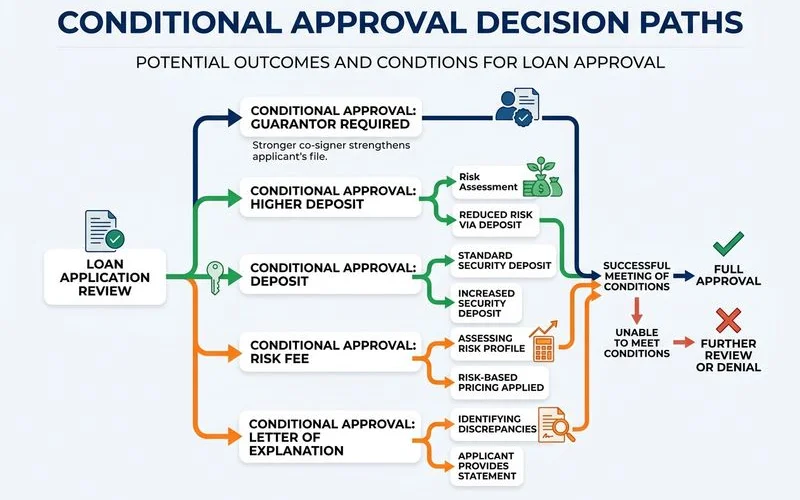
The most common conditions include a higher refundable deposit, a non-refundable risk fee, or the requirement of a third-party guarantor. Our team deals with these specific terms every single day across Texas. Here is a breakdown of the specific requirements you might encounter.
Higher Deposit
A higher deposit means you must pay 1.5 to 2 times the standard rent upfront, which is fully refundable when you move out clean. We always point out that the Texas Property Code places no legal limit on security deposit amounts. This lack of a cap allows landlords to ask for double deposits to minimize their financial exposure. Our data shows that a Class B apartment in Houston averaging $1,400 a month could require up to $2,800 upfront. This option is usually the least painful path if you have the cash available right now.
Risk Fee (One-Time)
A one-time risk fee is a non-refundable charge due at move-in, typically ranging from $200 to $700. We remind renters that the community keeps this money regardless of whether you stay or how you leave the apartment. This fee requires less cash upfront than a doubled deposit. Our clients often prefer this choice if they are short on immediate savings. The upfront savings can be helpful, even though the fee is lost forever.
Monthly Risk Fee
A monthly risk fee adds an extra $30 to $75 to your rent payment every single month. We find this option easy on the initial move-in budget, but it adds up significantly over a standard lease. An extra $50 a month turns into a $600 penalty by the end of your contract. Our advice is to calculate the yearly total before accepting this specific condition.
Guarantor Required
This condition means you must find a financially stable co-signer or hire a corporate guarantor service to back your lease. We recommend asking a family member with strong income to co-sign if possible, as this is the cheapest path. Many renters do not have that option and must turn to institutional services. Our team often sees properties accepting corporate guarantors like TheGuarantors or Leap. In 2026, these commercial services typically charge a one-time non-refundable fee of 70% to 110% of one month’s rent. A corporate fee for a $1,400 apartment will usually cost around $1,000.
Letter of Explanation
A letter of explanation is a written statement providing context for the negative flags on your screening report. We love this strategy because it is completely free to execute. The leasing office wants to understand the story behind the data points in their software. Our applicants often use a one-page letter to soften stricter conditions or shift the application back toward a standard approval.
Combination
Stacking conditions happens when a property demands multiple requirements, like both a risk fee and a guarantor. We see this frequently when an applicant has a recent eviction paired with very low credit. Negotiating one or more of these stacked penalties away is sometimes possible. Our firm successfully reduces these combinations by presenting a strong letter of explanation or extra income proof.
What to Do When You Receive a Conditional Approval
The best response to a conditional approval is to pause, calculate your total costs, and evaluate your alternatives. We tell every client to avoid panicking and never say yes right away. Taking a step back allows you to look at the financial reality of the offer. Our experts suggest following a specific review process.
- Get the conditions in writing: Demand exact amounts for risk fees, deposits, and due dates.
- Calculate total cash at signing: Add up rent, fees, and deposits to compare against your budget.
- Look for alternatives: Check if another community on your match list will approve you without extra fees.
- Negotiate where possible: Offer extra income documentation to reduce the demands.
- Accept or move on: Make a final decision based on cold, hard numbers.
This quick comparison table helps you weigh the three most common financial conditions. We outline the upfront impact and long-term costs of each choice below.
| Condition Type | Upfront Cost Example | Refundable? | Best For Renters Who… |
|---|---|---|---|
| Double Deposit | $1,400 to $2,800 | Yes | Have high cash reserves now |
| One-Time Risk Fee | $200 to $700 | No | Need a lower initial move-in cost |
| Corporate Guarantor | 70% to 110% of rent | No | Lack cash and personal co-signers |
How a Letter of Explanation Helps
A well-written letter of explanation changes the leasing manager’s view by providing human context to automated screening data. We know that property managers have the discretionary power to override software recommendations. Effective letters provide clear facts rather than emotional apologies. Our most successful client letters always include specific details.
- Address the specific flag factually, such as an eviction or bankruptcy.
- Explain the context briefly without sounding defensive.
- Document what has changed, like landing a stable job or paying off old debts.
- Attach verifiable proof, such as a recent pay stub or an Experian credit report.
- Close with a confident statement of why you are a reliable tenant today.
A letter does not always remove conditions completely, but it frequently reduces the financial pain. We have watched communities drop a $500 risk fee down to $200 after reviewing a solid explanation. Sometimes, a manager will accept a 1.25x deposit instead of demanding a full double deposit.
Negotiation Levers
Negotiation levers are specific, valuable offers you can make to a property manager to lower your approval conditions. We use several proven tactics to secure better terms for Houston renters. These strategies show the landlord that you are a serious, low-risk applicant. Our favorite levers include offering a longer commitment or showing extra financial stability.
- Longer lease term: Suggest signing a 15-month or 18-month contract instead of a 12-month agreement.
- Larger up-front prepayment: Offer to pay two or three months of rent at the lease signing.
- Extra income documentation: Submit recent bonus statements, side-income verification, or high savings balances.
- Strong rental references: Provide a direct employer attestation or a letter from a previous landlord.
- Personal guarantor: Bring in a family member with excellent credit to co-sign the agreement.
Using a licensed locator can help structure these offers professionally. We present these levers to the leasing office in a way that maximizes your chances of success.
When to Walk Away
You should walk away from a conditional approval when the upfront costs destroy your budget or when the fees feel predatory. We believe that not every approval is a victory worth taking. The requested conditions must make financial sense for your specific situation. Our team advises looking out for a few specific warning signs.
- Total cash at signing exceeds your move-in budget after accounting for utilities and moving expenses.
- The risk fee is unusually high relative to the rent, such as over 50% of one month’s rent for a single moderate flag.
- The community is stacking requirements, asking for both heavy conditions and a guarantor.
- A different community on your match list will approve your application without extra fees.
A good agent presents the trade-offs honestly and without pressure. We will always tell you directly if walking away is the smartest move for your wallet.
How to Move Forward
Receiving a conditional apartment approval texas property managers issue is a distinct win that keeps your housing search active. We encourage you to take your time, run the math, and pick the community that fits your budget. The right choice balances your immediate cash needs with your long-term financial goals.
Start your free pre-screened search or read about how third-party lease guarantors work.